
No, they’re actually quite lazy! Greyhounds are relaxed and chilled out characters who only need a couple of short walks a day. Usually around 20 minutes.
Why choose a retired greyhound?
For many, the connotation of retirement suggests old age and the twilight years.
When it comes to a ‘retired’ greyhound, they are typically aged between three and five years old, meaning they could have 10 more years of love to give. Greyhounds are bred to race, but their careers are short.
Over the years, measures have been put in place to ensure that retiring greyhounds are treated ethically. This means that trainers and keepers are responsible for finding them a suitable and safe home once their career has finished.
Chances are, if you’re reading this, you are considering welcoming a retired greyhound into your home and heart. But you might also have questions about the compatibility of your lifestyle with one of these charismatic canines.
Let’s bust some myths and find out why a retired greyhound might just be the pawfect doggo to join your family!
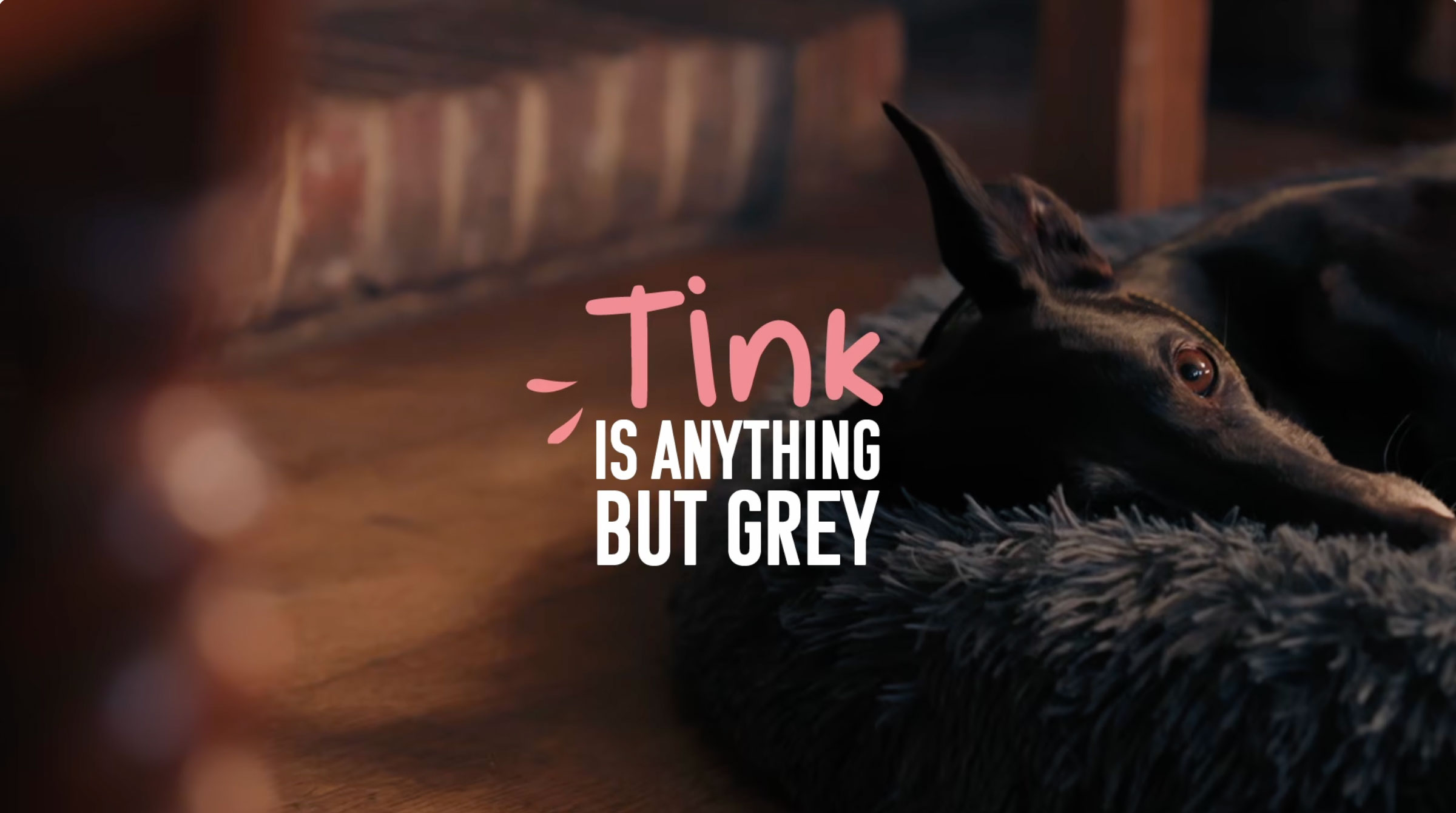
TV star Chris Hughes voices retired greyhound in our new adoption campaign ‘Anything But Grey’
Greyhound: vital statistics

Country of Origin
Great Britain
Weight
Male 27- 40KG
Female 26 – 34KG
Height
Male 71 – 76 cm
Female 69- 71 cm
Average Lifespan
12-15 years
Coat
Short hair
Moulting Level
Medium
Grooming
Light
Temperament
Intelligent, gentle, affectionate, even-tempered
Noise
Quiet
Exercise Requirements?
Greyhounds are built for speed in short bursts, not stamina. Two twenty-minute walks a day will usually suffice.
Household Compatibility?
This will depend on each dog’s unique personality. Greyhounds can live alongside other dogs, cats, children, and the elderly. But as with all dogs, some training and gentle introduction may be needed.
What makes a retired greyhound the perfect companion?
Ah greyhounds. One of the more misunderstood breeds. Assumed to be high-energy, high-demand hounds. When in reality, they are quite the opposite. Some might even say they’re like a cat in dog’s clothing… Or perhaps even more mystical, like an alien masquerading as a dog.
Unique character
As we alluded to just now, greyhounds are built differently from other breeds. While everyone will attest to their best friend being as unique as a snowflake, here are a few greyhound-specific characteristics that make these lovable goofballs extra special.
“8 hours’ sleep? More like 18…”
Teeth chattering
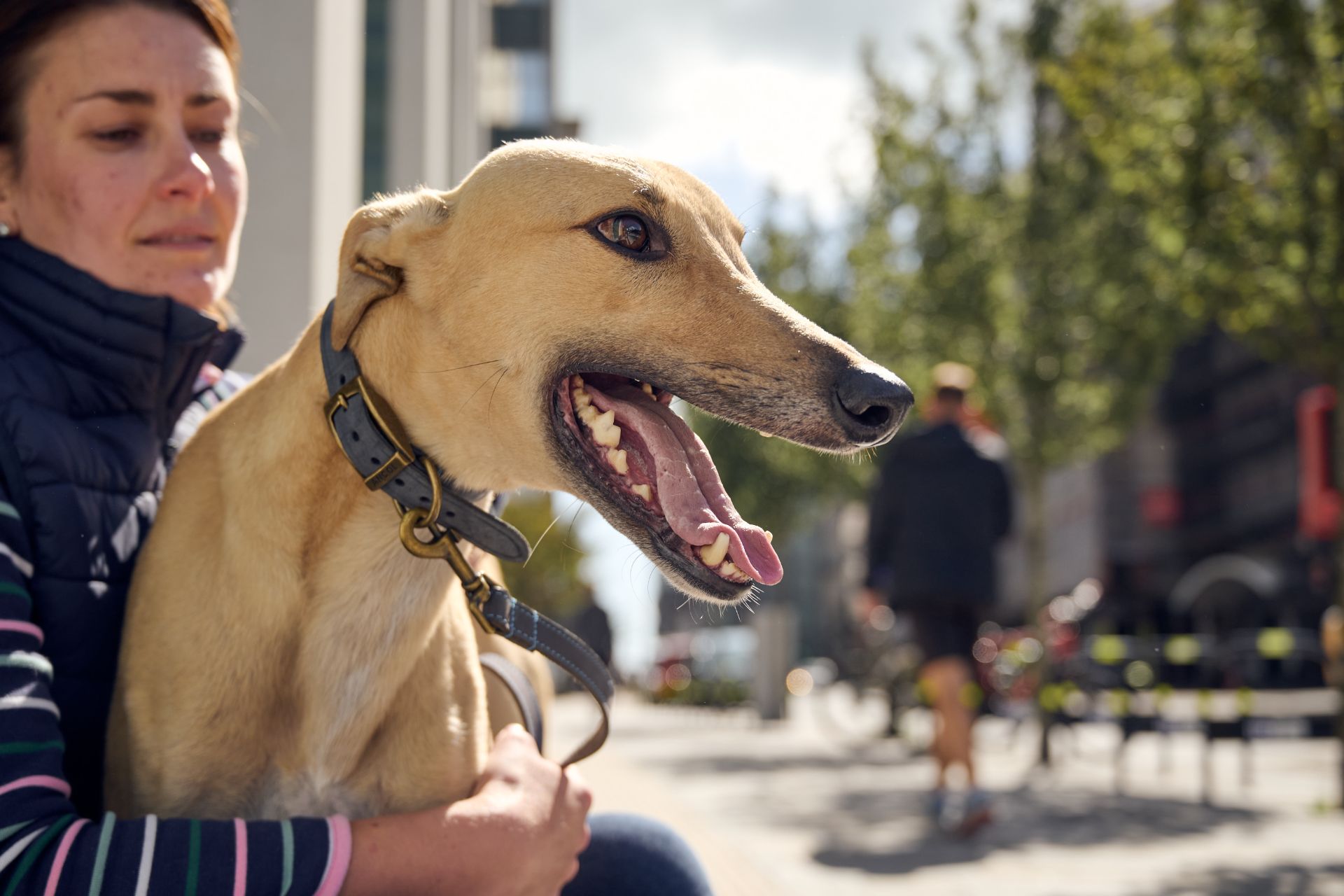
Greyhounds are known for teeth chattering. Often misunderstood as a negative behaviour, such as stress, aggression, fear, or being cold, it couldn’t be further from the truth.*
Teeth chattering in some dogs can actually be a sign of contentment. Your retired greyhound may chatter their teeth, much like how a cat purrs. This could be showing they feel safe, relaxed, or even excited.
Some greyhounds will chatter their teeth when they’re enjoying a particularly satisfying scratch or when they realise it’s time for walkies!
*Of course, all dogs are different, and learning to understand their body language is essential. Context is everything, and this is, of course, a guideline, not a rule.

Roaching
Is my retired greyhound broken?! Why is it lying on its back with its legs splayed?! This is colloquially known as “roaching”. While your pal may look a lot like a dead bug (hence the name), this position indicates that they feel safe, happy, and secure in their environment.
Greyhound zoomies
Most of us are familiar with “the zoomies”. Officially known as Frenetic Random Activity Periods (FRAPs), it’s a normal behaviour that dogs, cats, and even rodents can display. In a safe environment, zoomies are a good thing. It’s quite literally your buddy releasing energy.
Why are greyhound zoomies a little different? Your retired greyhound is built for speed but not necessarily the most agile breed. So it’s important to make sure they are in a safe space where the risk of getting hurt can be minimised.
Rooing
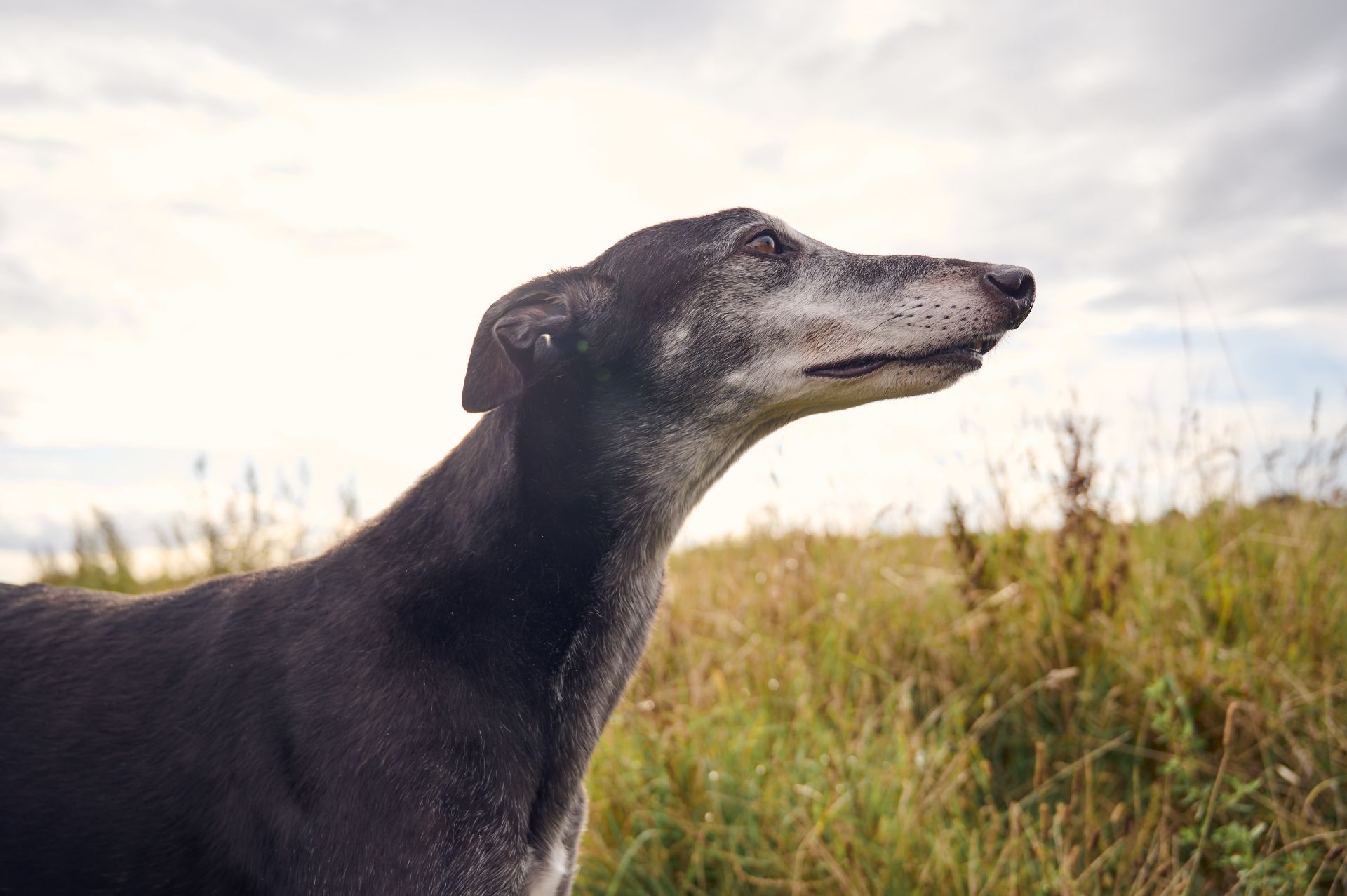
A bit like howling, but more like singing. While greyhounds are usually pretty quiet dogs, some enjoy a sing-song. Those who have been lucky enough to spend time with a greyhound will be familiar with rooing. And if you’ve witnessed a choir of them, you’ll know just how special it is. They are even known to “roo” when they hear similar noises, such as sirens!
Grooming and coat health
Retired greyhounds can be a good choice for anyone sensitive around longer-haired animals. This is because not only do they have short hair, but they don’t have an undercoat like other breeds. So, while your retired greyhound may not become a regular at the groomers, you may find they need a jacket when it’s cold.
Simple coat maintenance to help keep them healthy is important, though. Greyhounds can be prone to thin, sensitive skin. Your new friend will need a regular once-over to check for cuts, lumps, and bumps.
In fact, a simple routine and a good diet are the best way to keep your retired greyhound’s coat in good condition.

”Greyhounds have so little body fat that they can’t keep warm. The rule is: “If you need a jacket, so does he.” In a cold house, they start to shiver — so they need to wear pyjamas. If you can see a dog in a housecoat without laughing, you’re a stronger person than me.
What makes a retired greyhound the perfect companion?
There you have it. Just a few reasons why you’ll find yourself forever captivated by the unique charms of a gorgeous grey. Of course, there are many, many more. You can learn more about the history of this wonderful breed and what makes them special. But seeing is believing. Read our retired greyhound adoption stories below. Or get in touch to share your own with us.

Adoption story: Julie & Cora
The recipe for love? Cuddles, food…and sleepies! A life-long dog owner, Julie lost her beloved 15-year-old greyhound Sherpa in 2017, …
Adoption story: Sandy, Mark, Helen, and Wolfie
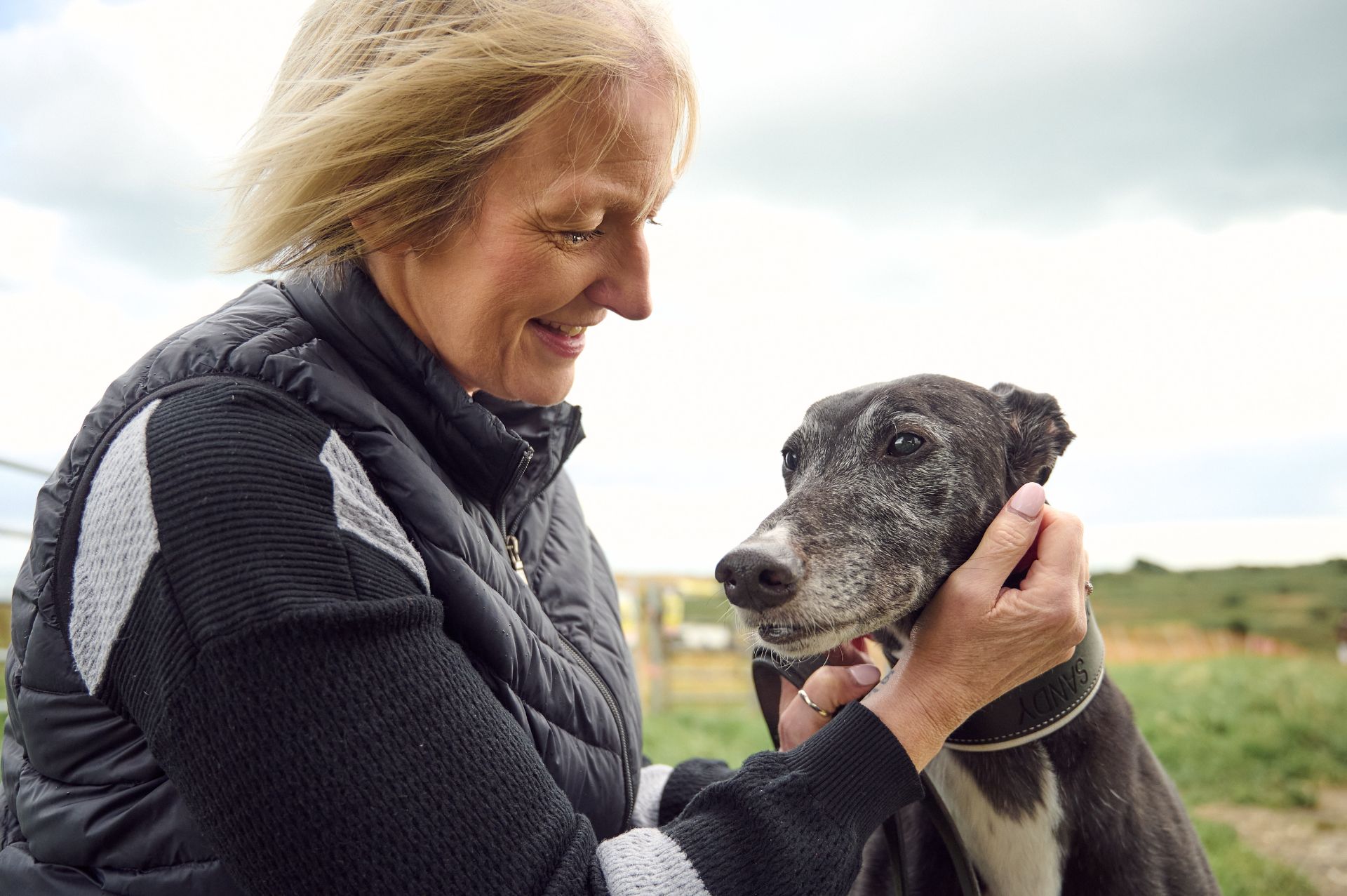
Two greyhounds, two humans, one happy family When Wolfie met Sandy, Mark and Helen, it was a journey into the …
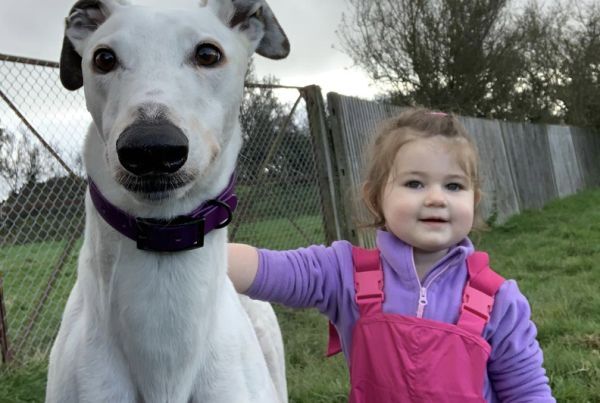
Adoption story: Harriet and Snowy
From kennel to cuddle It was love at first sniff for Snowy and three-year-old Harriet When Gary and Belinda’s young …
Let’s bust a few of the common myths…
But do I have enough space for a dog that likes to race?
No country estate required! Many greyhounds are adopted by people in smaller homes or flats. You don’t even need a garden, as long as you can take them out for a short walk. In fact, in their article, Paws in the City, the Evening Standard declared greyhounds to be one of the best pets for city living: “If you’re a newbie owner and looking for a relatively easy dog to manage, a greyhound is the perfect dog. I call them the world’s fastest couch potato. They truly are friendly, peaceful souls.”[1] (Adam Spivey, Southend Training)
[1] Paws in the City article by Layla Turner, Evening Standard, 11th September 2023
Will they be bouncing around my house?
Unlikely. Greyhounds can sometimes sleep up to 20 hours a day and love nothing more than a cuddle.
So, what are greyhounds really like?
Every dog is unique and it’s important to find that perfect bond, but greyhounds are known to be affectionate, loving, relaxed – and also a bit on the goofy side.
Can you cuddle a greyhound?
You won’t get much choice in the matter! Cuddle is their middle name. They’re hugely affectionate, and despite their sleek, athletic build, they love to curl up and snuggle with you.
But greyhounds are large dogs, aren’t they?
Yes, they can be. But they’re gentle giants. Their size can also vary, but it does not dictate their temperament. Often a large male could be a calmer character than a smaller female. And you’ll be amazed how small they can be when they curl up.
I heard they were aggressive dogs…
In fact, it’s the opposite. They’re loving and affectionate companions who imprint and bond for life. They’re more likely to melt your heart. Read more
Why are so many greyhounds waiting to be rescued?
They’re not. Retired greyhounds aren’t looking to be rescued, they’re looking for their first forever family – and they have a lot of love to give.
Aren’t retired greyhounds old?
Not at all. Their racing careers are short. On average they are usually around three to four years old when they’re ready for adoption. Some may even be younger if they weren’t interested in racing.
Why aren’t they a first choice for adoption?
Because people don’t know what they’re missing. Our human misconceptions have got in the way of what could turn out to be one of life’s most beautiful friendships. And we’re here to fix that.
Can greyhounds live with other pets?
With careful training, many greyhounds can live quite happily with cats and other pets. The homing centre you choose will be able to advise you on this and help match you with a greyhound which is perfect for your family.
Do greyhounds come in different colours?
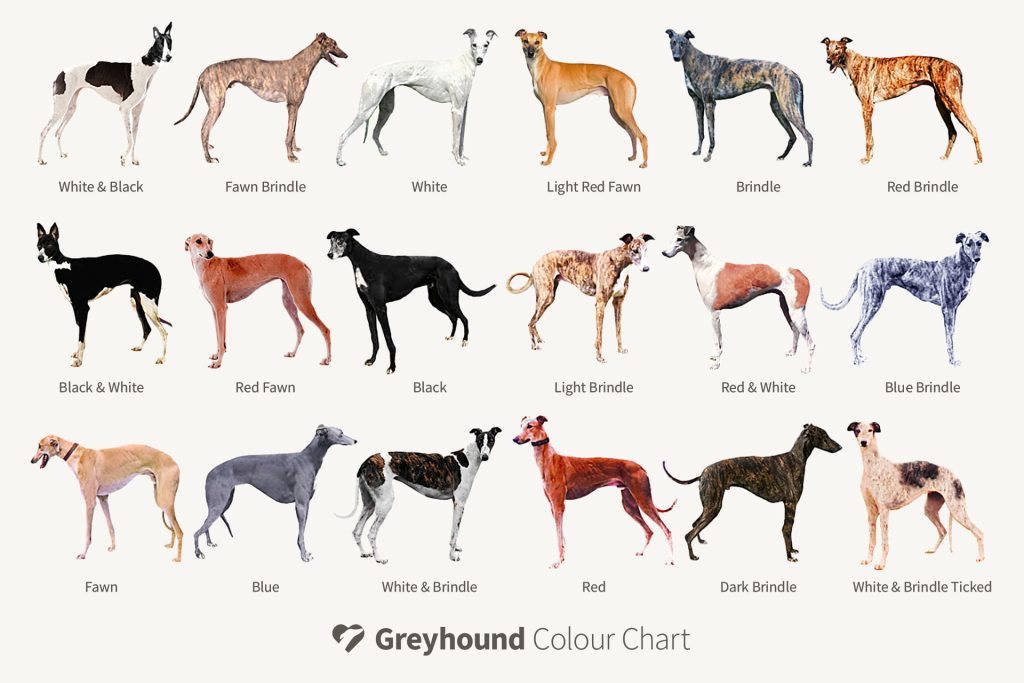
They do! While temperament will be top of your list when choosing a greyhound, they come in a variety of stunning coat colours – from black and white to fawn, blue and brindle. There are often more black greyhounds looking for their forever homes and these beautiful dogs shouldn’t be overlooked.
What about their racing history?
As an owner of a retired greyhound, you will be the proud owner of a pet with history. Whether they were a top-class athlete or more of a slow coach, you can look back on their career, research their pedigree and you may even be able to watch videos of them whizzing past the finish line!
How do greyhounds move from racing to the adoption centres?
These amazing dogs find their perfect homes through a network of homing centres that are approved by the sport’s regulator, the Greyhound Board for Great Britain (GBGB), ensuring the centres uphold the highest standards of welfare. Along with the regulator, every racing owner pays towards the cost of finding their athlete a forever home when it’s time for them to swap the track for the sofa.
Could you be a greyhound’s first forever family?
Head to our greyhound info hub to read real-life greyhound adoption stories, useful greyhound guides or get in touch.

Greyhound tips for around the home
Greyhound tips for around the home
What are you looking at? A guide to common sighthound breeds in the UK
What are you looking at? A guide to common sighthound breeds in the UK

Greyhound quirks – what makes them so unique?
Greyhound quirks – what makes them so unique?

Adoption story: Julie & Cora
Adoption story: Julie & Cora
Ready to adopt guide
Ready to adopt guide

Adoption story: Mark, Helen, Wolfie & Sandy
Adoption story: Mark, Helen, Wolfie & Sandy

Adoption story: Harriet & Snowy
Adoption story: Harriet & Snowy

Adoption journey
Adoption journey

Get to know the breed